FYI — What Does Parma Mean?
Parma (पर्म) is the traditional Nepali system of reciprocal labor exchange and community cooperation, where people pool their knowledge and strength to support one another.
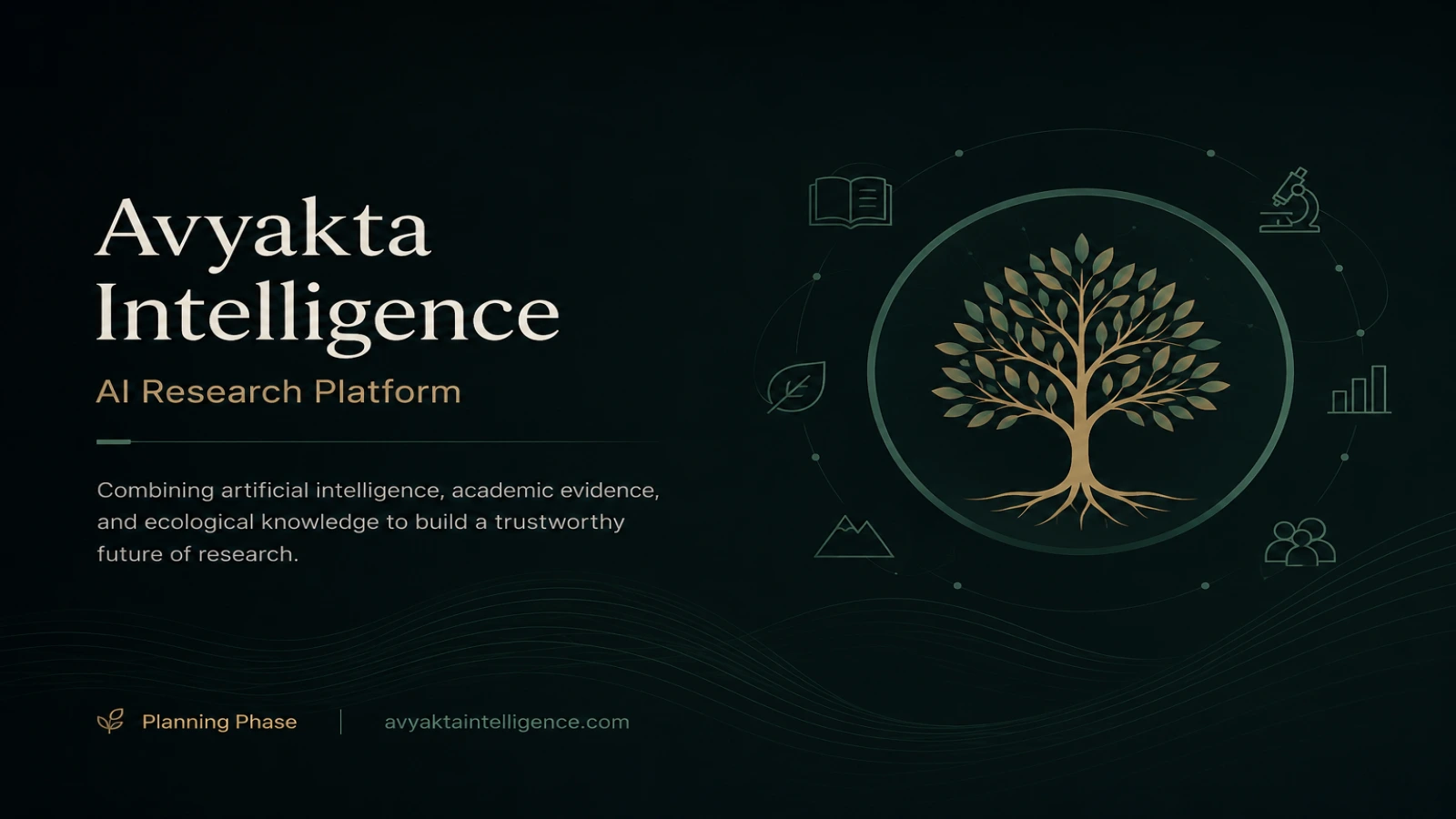
Parma AI (पर्म)
Sovereign AI Research Platform for Local Botanical & Ecological Knowledge
Status: 🚧 Planning & System Architecture Phase
Architecture & Engineering: BirenJung Tech (Lead Technical Architect: Birendra Jung Rai)
Academic Collaboration: Tribhuvan University (TU) — Department of Botany
Executive Overview
Parma AI is an open, sovereign research platform designed to protect and organize regional plant science, local botanical knowledge, and indigenous plant wisdom.
Building AI for regional science presents a major challenge: global AI models suffer from a massive local data void. Valuable regional plant research (such as Tribhuvan University thesis papers, field logs, and local botanical insights) is completely unrepresented in global LLM training sets. Rather than building a generic AI wrapper that risks hallucinating local plant facts, Parma AI is engineered around a strict framework of data sovereignty, verifiable provenance, and explicit contributor consent.
As the Founder and Technical Lead of BirenJung Tech, I am responsible for the end-to-end system architecture, clean backend API design, database schemas, and sovereign RAG pipeline planning. Academic direction, field validation, and botanical curation are led in collaboration with researchers at Tribhuvan University.
The Problem
Modern AI models generate fluent text, but they fail local plant researchers in two critical ways:
-
The Local Data Void: Indigenous plant wisdom, traditional herbal usage, and regional botanical field studies are missing from global AI training sets.
-
The Trust Deficit: Standard AI outputs provide no verifiable citations, leaving botanists and scholars unable to trace claims back to primary field notes or published papers.
Trying to fix this by fine-tuning AI models is architecturally flawed. Fine-tuning permanently bakes data into model weights—making it impossible to remove incorrect information, attribute dynamic sources, or protect local data rights.
The Vision
We believe technology should support local scholars, not extract from them.
Parma AI is built on one clear mission:
Preserve local botanical knowledge, connect field observations with scientific research, and make it accessible through responsible, sovereign AI.
Initial development is laser-focused on botany and plant science for local researchers in Nepal, creating a scalable foundation that can expand to zoology and broader natural sciences over time.
Key Platform Principles
Most AI tools focus on generating quick answers. Parma AI focuses on building trust for local scholars:
-
Local Botanical Focus: Cataloging regional flora, medicinal herbs, and plant ecosystems while keeping full data ownership in the hands of local researchers.
-
Verifiable Citations: Every AI insight is backed by academic literature and field records, displaying clear primary sources alongside responses.
-
Plain & Accessible Design: Clean, simple interfaces that work reliably for researchers in the field without complex jargon or bloated UI.
-
Expert Curation: Academic experts and field botanists remain central to verifying data, improving datasets, and guiding the platform.
-
Data Sovereignty: Built with consent-aware metadata governance so local traditional knowledge is safeguarded against unauthorized commercial extraction.
Proposed Technology Stack
Keeping the implementation simple, fast, and maintainable without complex JavaScript framework overhead:
-
Frontend: Clean HTML5, Tailwind CSS, lightweight JavaScript (Fetch API for asynchronous UI updates).
-
Backend: PHP Backend API (
contact.php,inquire.phpwith honeypot security and structured JSON responses). -
AI & Knowledge Layer: Provider abstractions (Claude API / OpenAI API), Retrieval-Augmented Generation (RAG), vector indexing, and academic repository integration (e.g., TU archives, MIT DSpace).
Development Roadmap
-
Phase 1: Botanical Research Assistant
AI-assisted research queries, citation display, user access, and admin controls. -
Phase 2: Local Plant Repository
Digital herbarium indexing, document management, and field-note search tools for local botanists. -
Phase 3: Sovereign RAG Infrastructure
Retrieval-Augmented Generation, vector search, and semantic knowledge graphs for regional plant datasets. -
Phase 4: Multi-Domain Natural Sciences
Expanding the verified architecture from botany into zoology, wildlife conservation, and regional ecology.
My Role
As Technical Lead (BirenJung Tech), I manage:
-
System architecture & database model design
-
Clean backend API engineering & security
-
RAG pipeline & AI provider abstractions
-
Asynchronous frontend integration
-
Infrastructure planning & long-term roadmap
Academic research direction, field data collection, and botanical validation are led by our collaborators at Tribhuvan University.
Current Progress
-
✅ Vision & scope definition (Focused on Botany & Local Researchers)
-
✅ Research discussions & TU academic alignment
-
✅ System architecture & UI design system finalized
-
✅ Simple, high-performance HTML/Tailwind/PHP stack established
-
⏳ Backend development & database modeling starting soon
Final Thought
Artificial intelligence generates text. Parma AI preserves plant wisdom, connects scientific evidence, and respects local research sovereignty.